
”
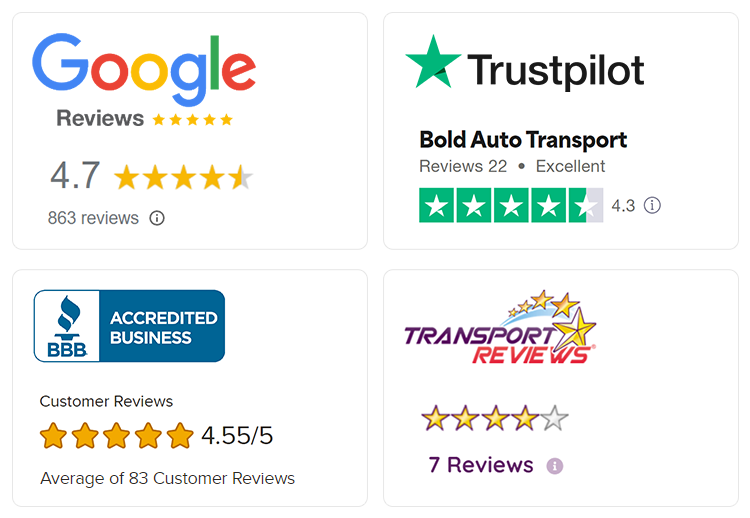
They made this process so easy for me. From my first point of contact, to pricing, to communication, turn around time— 5 stars in all areas. Highly recommend , would definitely use again. Trustworthy & Reliable.
Ashley L

Licensed open and enclosed car shipping to and from Houston - clear quotes, realistic timelines, and door-to-door coordination across the Houston metro.
USDOT 3775668 · MC 1349681. BBB A+ Accredited.
Carrier coverage checked at assignment.
Vehicle, locations, timing, equipment, and availability affect pricing.
Confirm pickup and carrier transit windows in writing.
Verify the current public BBB business profile.
Check limits, exclusions, and deductible at assignment.
Our role: Bold Auto Transport is an FMCSA-registered property broker that arranges vehicle shipping with independent, authorized motor carriers. Bold does not own or operate the truck; the assigned carrier performs pickup, transport, and delivery under its own authority.
Last updated: June 6, 2026
Houston, the vibrant energy capital of the world, is a bustling metropolis with a rich cultural scene and a thriving economy. Houston is a hub for auto transport services, making it easy to ship cars to or from the city. Whether you're relocating, buying a new vehicle, or simply need to transport your car across the country, Houston offers a competitive and efficient auto transport market. In this article, we'll explore the ins and outs of auto transport in Houston, highlighting the benefits, services, and expert providers like Bold Auto Transport.
Houston car shipping moves a vehicle to or from anywhere in the Houston metro using a licensed, federally authorized carrier instead of driving it yourself. As the largest city in Texas and a major energy and port hub, Houston sees heavy auto transport volume and strong carrier availability.
Short answer: Regional Texas and Gulf moves often take a few days, while cross-country routes run roughly a week, depending on distance and carrier availability. Open transport is the affordable standard; enclosed transport suits high-value vehicles. Request a route-specific quote for an accurate price.
Houston is served by I-10, I-45, I-69, and the Beltway 8 loop, with frequent carriers across the sprawling metro. Most neighborhoods allow straightforward door-to-door pickup, while addresses deep in the suburbs may need a slightly wider window. Busy lanes to California and Florida move quickly, and summer heat is worth factoring in for sensitive vehicles.
Get a route-specific planning estimate, then review the written terms before booking.
Houston car shipping services are extensive and varied in terms of number. Companies generally offer open, enclosed, or expedited vehicle transport services so that customers can be as flexible as possible. Open transport is easy on the pocket and the fastest, while enclosed transport provides extra protection. Door-to-door service is offered to bring even more convenience to the table. Whatever the vehicle, be it a sedan, an SUV, or a motorcycle, Houston auto shipping market definitely has the know-how and expertise to handle it efficiently.
The easy way to relocate a vehicle is through auto transport in Houston. For it saves you from the many hassles of long-distance driving such as wear and tear on your vehicle, gas, and in some cases, mechanical failures. You wouldn't even have to take your vehicle across unknown roads, and your car trouble would be of no concern to you, because auto transport companies handle all logistics in a way that it reaches you without any stress involved.
Among great auto transport companies, Bold Auto Transport is top-notch in auto transport in Houston. It is one of the best brands in the industry when it comes to providing seamless car relocation solutions, best suited for customer satisfaction and safety. It has all the experience necessary for the car shipping company, whether open or enclosed carriers.
They made this process so easy for me. From my first point of contact, to pricing, to communication, turn around time— 5 stars in all areas. Highly recommend , would definitely use again. Trustworthy & Reliable.
I had a great experience working with Bold Auto Transport! I reached out to them on a late Monday afternoon, and had my car picked up Wednesday morning and dropped off in another state the SAME day before the drop off location business closed at 5 pm. They outsource and they take a deposit and you pay the rest to the outsourced group. I had the drivers contact information and was able to reach out to him with any questions and he sent me pictures and confirmed when my car was dropped off. The process from start to finish was smooth and easy. If I ever need car transport, I will always reach out to Bold Auto! Their customer service is fantastic and there is always someone available to help— and if not, they will call you back within 10 minutes to see what was needed. Highly recommend!
I cannot say enough good things about this company. They were able to have my car and motorcycle picked up on separate occasions from my house in the mountains in California. No other company would even try to get someone to come to my home because I live an hour drive up in the mountains. These guys did not hesitate and found two different drivers to come up. My car and motorcycle were taken to the East Coast and the delivery was flawless. Whenever I had a question or ordered more service, Adam, William, Chris and another person whose name I forget was always there to help. The phone was always answered by them personally and I was even given their direct lines that they always answered personally. This company does not use an annoying voice system but has humans answer their phones! It’s so great! Also, the drivers they used were exceptional people. They were very nice and very responsible with my vehicles. This company is awesome! Oh, and the prices were competitive and reasonable. A++ to them!



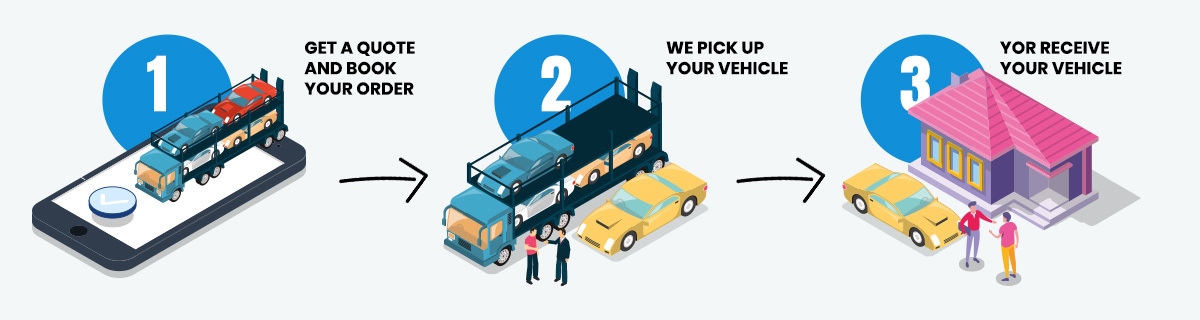
Enjoy vehicle transport to/from Houston 3 simple steps:
Houston's strategic position makes it ideal for auto transport because it boasts direct connections to all major cities in Texas and beyond. Here are some of the most common popular routes:
| Shipping From Connecticut | Shipping To Connecticut |
| Shipping To Texas | Los Angeles, CA |
| Houston, TX | New York, NY |
| Dallas, TX | Chicago, IL |
| San Antonio, TX | Denver, CO |
| Austin, TX | Phoenix, AZ |
| Fort Worth, TX | Miami, FL |
| El Paso, TX | Atlanta, GA |
| Arlington, TX | Seattle, WA |
| Plano, TX | Las Vegas, NV |
| Laredo, TX | Orlando, FL |
Here's a snapshot of recent quotes provided by Bold Auto Transport for auto transport in Houston, Texas:
| Quote | Date | Pickup City | Delivery City | Vehicle Type |
| $550 | Feb 20, 2025 | Houston, TX | Dallas, TX | Sedan |
| $800 | Feb 15, 2025 | San Antonio, TX | Houston, TX | Pickup Truck |
| $1,200 | Feb 10, 2025 | Los Angeles, CA | Houston, TX | Sedan |
| $1,500 | Feb 5, 2025 | New York, NY | Houston, TX | Sedan |
| $400 | Feb 25, 2025 | Austin, TX | Houston, TX | Sedan |
| $1,000 | Feb 22, 2025 | Chicago, IL | Houston, TX | SUV |
| $700 | Feb 18, 2025 | Miami, FL | Houston, TX | Pickup Truck |
| $900 | Feb 12, 2025 | Denver, CO | Houston, TX | Sports Car |
| $1,800 | Feb 8, 2025 | Seattle, WA | Houston, TX | Pickup Truck |
| $600 | Feb 24, 2025 | New Orleans, LA |
Houston, TX | Sedan |
The time taken for car transport in Houston differs considerably depending on how far and the type of transport. Typical local moves within the State of Texas require between 1 and 2 days, while a cross-country trip could take as long as 7 days. Again, factors such as traffic and weather conditions influence the time of delivery. For instance, it takes around 5-7 days if you plan on having car transport in Houston, TX to Los Angeles.
When it comes to prices offered by auto transport companies in Houston, a lot depends on various concerns like the distance, type of transport (open or enclosed), size of the vehicle, and so on. Open transport is less expensive but generally starts around $500 for short distances. Enclosed transport could end up costing 50% more while being safe for high-value automobiles. For instance, auto shipping in Houston, TX to New York would be between $1,200 and $1,800. Make sure to use our car shipping cost calculator to get yourself an estimated price. Make sure to use our car shipping cost calculator to get yourself an estimated price.
Bold Auto Transport serves a wide range of areas in Houston, ensuring that no matter where you are in the city, your car can be safely transported. Whether you're moving within Texas or beyond, we provide seamless service for various routes, including shipping a car to Fort Worth, which is a common request for customers relocating or purchasing vehicles between these two major cities.
77002, 77003, 77004, 77005, 77006, 77007, 77008, 77009, 77010, 77011, 77012, 77013, 77014, 77015, 77016, 77017, 77018, 77019, 77020, 77021, 77022, 77023, 77024, 77025, 77026, 77027, 77028, 77029, 77030, 77031, 77032, 77033, 77034, 77035, 77036, 77037, 77038, 77039, 77040, 77041, 77042, 77043, 77044, 77045, 77046, 77047, 77048, 77049, 77051, 77053, 77054, 77055, 77056, 77057, 77058, 77059, 77060, 77061, 77062, 77063, 77064, 77065, 77066, 77067, 77068, 77069, 77070, 77071, 77072, 77073, 77074, 77075, 77076, 77077, 77078, 77079, 77080, 77081.
Car transport in Houston allows for two main possibilities: open transportation and enclosed transport. Open transport is inexpensive and works fine for most vehicles, while enclosed transport offers extra protection from weather and road debris and is therefore best suited for classics or vehicles that are valuable. Expedited services will also be provided for urgent car transport in Houston.
If you are keen to save money on shipping a car, here are a few money-saving tips to keep in mind:
Choose Open Transport: Unless your vehicle requires extra protection, open transport is the most cost-effective option for car shipping in Houston, TX.
Be Flexible with Dates: Avoid rush or guaranteed delivery services, which can increase costs.
Compare Quotes: Research different auto transport companies in Houston, Texas to find the best rates.
Prepare Your Vehicle: For operable vehicles, the condition should be excellent, so that no extra fees go for inoperable state allowances.
Before having a car shipping in Houston, TX, make sure to:
Remove Personal Items: Clear your vehicle of personal belongings.
Check for Damage: Document any pre-existing damage.
Fuel Level: Ensure the gas tank is about a quarter full.
Cleanliness: Clean your vehicle to prevent moisture-related issues during Houston vehicle transport.
Bold Auto Transport operates under USDOT 3775668 and MC-1349681, the federal authority numbers that confirm a registered, legitimate auto transport operation. Customers in Houston get clear, responsive coordination - realistic quotes, an explained pickup window, and a team that answers the phone. Speak with a transport coordinator directly at (469) 942-5444.
Address-based pickup and delivery coordination, subject to safe and legal access for the assigned carrier.
Houston's size and layout affect how delivery actually happens, and it is worth understanding before you book. The sprawling suburbs — Katy, The Woodlands, Sugar Land, and similar communities — generally have wide streets and open access, which makes them straightforward for true door-to-door transport, with the carrier coming directly to the residence.
Dense inner-Loop blocks are a different story. Narrow streets, tight turns, low-clearance spots, and limited curb space can prevent a full-size 75-foot car carrier from reaching an exact address. In those cases the driver arranges a nearby meeting point — a wide commercial street, a shopping-center lot, or a large parking area a short distance away. This is normal and keeps both your vehicle and the carrier safe. If you live on a tight inner-Loop street, mention it when you book so your coordinator can plan access in advance rather than improvising on pickup day.
There is no single flat rate for Houston car shipping, because several factors combine on every route. Understanding them helps you read a quote with confidence instead of chasing the lowest number. The table below breaks down the main pricing factors and how each one tends to move your cost.
| Pricing factor | How it affects your Houston quote |
|---|---|
| Distance and route demand | Longer routes cost more in total but often less per mile; high-demand I-10 lanes like Houston–California tend to price competitively. |
| Vehicle size and weight | A full-size SUV or pickup takes more space and weight than a sedan and costs more to move. |
| Open vs. enclosed transport | Enclosed costs more and is chosen for high-value, luxury, or classic vehicles. |
| Operable vs. inoperable | A non-running vehicle needs special loading equipment, which affects price and carrier matching. |
| Season and timing | Short-notice requests and Gulf Coast hurricane season disruptions in summer and fall can tighten availability and push prices up. |
| Pickup and delivery access | Easy suburban door-to-door is simpler to service than a tight inner-Loop block that needs a meeting point. |
A warning worth heeding: the lowest quote is not always the one that actually moves your car. Some brokers post an unrealistically low rate that no carrier will accept, so the vehicle sits unassigned for days. A realistic market quote that reflects current carrier availability usually gets your car picked up faster than a number that looks good but no driver will take.
Distance and demand together drive timing, not distance alone. Houston's position on I-10 means westbound lanes toward California and Arizona and eastbound lanes toward Louisiana, the Southeast, and Florida usually see steady truck traffic, which tends to shorten the wait between booking and pickup. The I-45 connection to Dallas is one of the busiest short-haul lanes in the state and is typically easy to cover.
One genuinely local factor sets Houston apart from inland metros: Gulf Coast hurricane season, which runs through the summer and fall. Major storms and the days around them can pause pickups, reroute carriers, and compress schedules once roads reopen. None of this is a reason to avoid shipping — it is a reason to build in a little flexibility and book a realistic window ahead of a hard deadline during those months.
SHORT ANSWER: Houston's spot on the I-10 east–west corridor gives it steady carrier availability toward California, the Southeast, and Dallas, which often means shorter pickup windows than harder-to-reach markets. The main local timing variable is Gulf Coast hurricane season in summer and fall, when storms can briefly affect scheduling. Exact transit time is confirmed once a carrier is assigned to your route.
Choosing between open car transport and enclosed transport is the single decision that most affects both your price and the level of protection your vehicle gets. The comparison below lays out how the two options differ for a Houston shipment.
| Factor | Open transport | Enclosed transport |
|---|---|---|
| Cost | Lower, most common | Higher (typically a meaningful premium) |
| Protection | Standard, exposed to weather and road debris | Fully enclosed from weather, debris, and exposure |
| Best for | Everyday sedans, SUVs, trucks | Luxury, exotic, classic, high-value vehicles |
| Availability | Widest on the I-10 and I-45 corridors | More limited; may add lead time |
SHORT ANSWER: Open car transport is the most common and cost-effective choice for everyday Houston vehicles. Enclosed transport is the better option for luxury, exotic, classic, or high-value cars that need full protection from weather and road exposure.
Consider an engineer relocating from a townhome near the Energy Corridor to a new role in Los Angeles, with a second family car to move as well. They first grab a suspiciously cheap online quote, then wait several days with no assigned carrier while their start date approaches — the rate was simply too low for any driver running the Houston-to-California lane to accept. They switch to a realistic market quote that reflects current demand on I-10, get a carrier assigned within about a day, and ship the everyday SUV on open transport while choosing enclosed transport for the family's higher-value coupe.
Because their suburban street has wide access, both vehicles are picked up true door-to-door with no meeting point needed. The cars arrive within the expected window, and the joint inspection at delivery matches the bill of lading recorded at pickup. The lesson is consistent across nearly every Houston move: realistic pricing tied to real carrier availability, plus a transport type matched to each vehicle, beats the lowest headline number.
A few avoidable missteps cause most Houston shipping headaches. Booking only on the lowest quote often leads to a car that never gets assigned. Forgetting to mention a tight inner-Loop block forces last-minute access scrambling on pickup day. Expecting an exact pickup hour — rather than a window — creates unnecessary stress, since carriers coordinate multiple vehicles across a large metro. Booking with no flexibility during peak hurricane season can collide with a storm pause. And leaving valuables in the car is discouraged, as personal items are generally not covered during transport.
A simple recommendation: book a realistic quote a little ahead of your ideal date, flag any access constraints up front, build in flexibility if you are shipping in summer or fall, and keep your phone available during the pickup window so the driver can coordinate.
It depends on distance, vehicle size, open vs enclosed transport, whether the vehicle runs, your locations, and demand. Houston's high volume often means good availability - request a route-specific quote for an accurate number.
Regional Texas and Gulf moves often take a few days; cross-country routes usually run about a week. Timing is confirmed once a carrier is assigned.
Open transport is the common, cost-effective choice for everyday vehicles. Enclosed transport is better for luxury, exotic, or classic vehicles that need maximum protection.
Yes. Inoperable vehicles can ship with special loading equipment such as a winch - disclose it when you request a quote so the right carrier is dispatched.
It is best not to. Carriers move vehicles, not household goods, and loose items add weight and risk. Remove valuables and toll tags before pickup.
Bold Auto Transport serves cities across Texas. See our complete Texas car shipping guide for statewide routes, transit times, and pricing.
Door-to-door car shipping to other cities across Texas.
Most popular, cost-effective option for everyday vehicles.
Covered-trailer options that reduce direct exposure to weather and road debris.
Priority dispatch requests with carrier-accepted estimated windows.
Address-based coordination subject to safe and legal carrier access.
Get a route-specific planning estimate and review the written terms before booking.
Get Your Price


