
”
They made this process so easy for me. From my first point of contact, to pricing, to communication, turn around time— 5 stars in all areas. Highly recommend , would definitely use again. Trustworthy & Reliable.
Ashley L

Licensed open and enclosed car shipping to and from Tampa - clear quotes, realistic timelines, and door-to-door coordination across the Bay area.
USDOT 3775668 · MC 1349681. BBB A+ Accredited.
Carrier coverage checked at assignment.
Vehicle, locations, timing, equipment, and availability affect pricing.
Confirm pickup and carrier transit windows in writing.
Verify the current public BBB business profile.
Check limits, exclusions, and deductible at assignment.
Our role: Bold Auto Transport is an FMCSA-registered property broker that arranges vehicle shipping with independent, authorized motor carriers. Bold does not own or operate the truck; the assigned carrier performs pickup, transport, and delivery under its own authority.
Last updated: June 6, 2026
The city of Tampa, Florida, is a lively place filled up with rich history, a mixture of cultures, as well with beautiful waterfront views. This city is one of the fastest-growing cities in the United States and has a population of more than 387,000 local residents; it is also an important hallmark for both business and leisure tourism. Tampa auto transport services are highly sought after because of Tampa's strategic location along the Gulf Coast, making it an attractive destination for visitors and one of the leading cities in the industry of auto transport in Tampa, Florida. With an extensive network of highways and proximity to major metropolitan areas, Tampa is not only among the best places to visit but also perfect for car shipping across the country.
Tampa has seen an increase in demand for Tampa car transport services due to population growth, increased mobility in today's world, and a thriving economy. Whether you are relocating, buying a car online, or sending a car to a family member, understanding how the auto shipping in Tampa works can make the process much smoother.
Tampa car shipping moves a vehicle to or from anywhere in the Tampa Bay area using a licensed, federally authorized carrier instead of driving it yourself. As a fast-growing Gulf Coast metro and a major snowbird destination, Tampa sees strong seasonal demand and good carrier availability.
Short answer: Regional Southeast moves often take a few days, while routes to the Northeast or Midwest run roughly a week, depending on the season. Open transport is the affordable standard; enclosed transport suits high-value vehicles. Request a route-specific quote for an accurate price.
Tampa is served by I-275, I-4 toward Orlando, and I-75, with frequent carriers across the Bay area. Snowbird season tightens availability and raises prices on northbound spring lanes, so booking with lead time helps.
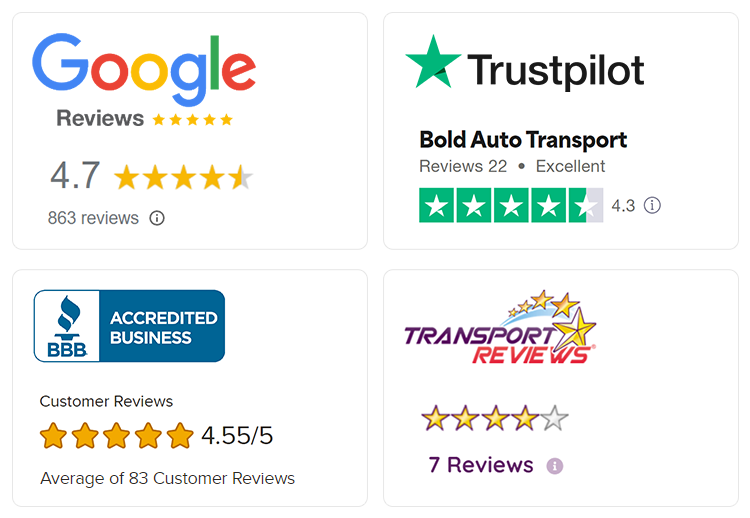
Get a route-specific planning estimate, then review the written terms before booking.
You can remove the hassle of shipping a vehicle by contacting to a company for an auto transport in Tampa. Several transport companies provide their customers with an open or enclosed transport option as per their needs and budget. Many car transport companies in Tampa, FL offer open and enclosed transportation, and they even provide a door-to-door service. What it means is that your vehicle will be picked from home or office and delivered directly to an address in Tampa or elsewhere.
Choosing a reputable car transport company in Tampa is essential for a smooth experience. Within the top best car shipping experts in town, Bold Auto Transport stands out as one with its purpose of butting the cost of services with the satisfaction of customers using this company.
Bold Auto Transport has built a solid reputation with the people of Tampa for giving honest quotes devoid of any hidden charges. Customers rave about the knowledgeable agents whose help they receive to guide them through the process of auto transport in Tampa professionally and caringly. The company provides both open and enclosed transport as options for shipping, depending on different needs, making timely deliveries.
Laura P.: "I can 't thank Bold Auto Transport enough for their service, really great. They picked up my vehicle very on short notice, and across the country delivered it without ever any issue. Staff are friendly and knowledgeable to answer any concerns at ease. Definitely one of the best amongst car transport companies in Tampa, FL!"
Paul R.: "A very good experience with Bold Auto Transport during relocation for my job. These guys came extremely fast, reliable, and much more affordable than any other quotes I received for car transport in Tampa, FL. My car was in the correct shape, and having them take care of everything reassured me. They also offer services like Car Transport from New Jersey to Florida, ensuring a seamless experience for long-distance moves."
They made this process so easy for me. From my first point of contact, to pricing, to communication, turn around time— 5 stars in all areas. Highly recommend , would definitely use again. Trustworthy & Reliable.
This was my first experience getting a vehicle transported and Andrew made this experience smooth and easy despite all the problems I faced with the car dealership to a driver not showing up for pick up. Andrew was with me every step of the way and worked so hard to make my experience as great as it can be and even followed up. I will definitely be only dealing with this company for future transports and I'll always 100% recommend Andrew .
Nothing but good things to say about my experience. Told me how much, when they would pick up and when they would deliver. Spot on down to the penny and minute. A+



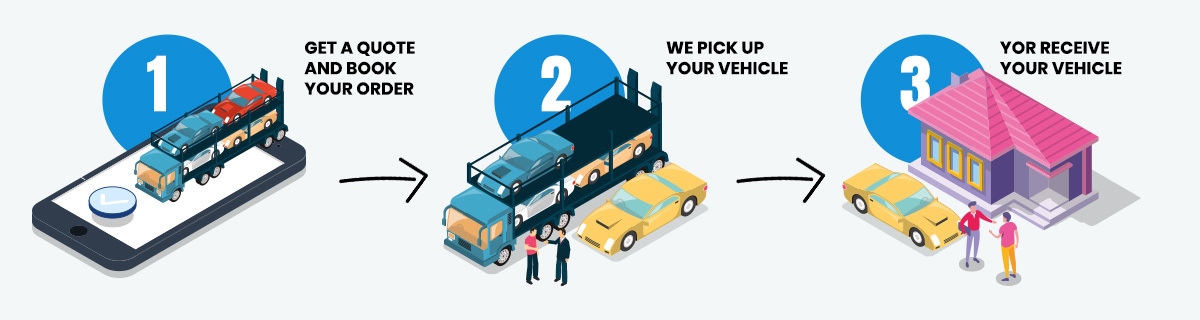
Enjoy vehicle transport to/from Tampa 3 simple steps:
| Shipping from Tampa | Shipping to Tampa |
| Miami, FL | New York, NY |
| Orlando, FL | Los Angeles, CA |
| Atlanta, GA | Chicago, IL |
| Jacksonville, FL | Dallas, TX |
| New York, NY | Seattle, WA |
| Los Angeles, CA | Miami, FL |
| Chicago, IL | Orlando, FL |
| Dallas, TX | Atlanta, GA |
| Seattle, WA | Jacksonville, FL |
| Houston, TX | Miami, FL |
Getting instant quotes for car shipping in Tampa, FL is simple. Simply share information about the type of vehicle you own, the place of pickup, and the preferred date for delivery, and our system will generate reasonable quotes tailored according to your needs, keeping everything open and affordable.
| Quote | Date | Pickup City | Delivery City | Vehicle Type |
| $1,200 | December 28, 2024 | Tampa, FL | Miami, FL | Sedan |
| $1,500 | December 27, 2024 | Tampa, FL | Orlando, FL | SUV |
| $800 | December 23, 2024 | Tampa, FL | Jacksonville, FL | Motorcycle |
| $2,000 | December 22, 2024 | Tampa, FL | Atlanta, GA | Truck |
| $1,800 | December 18, 2024 | Tampa, FL | Charlotte, NC | Van |
| $950 | December 17, 2024 | Tampa, FL | Fort Lauderdale, FL | Convertible |
| $1,100 | December 12, 2024 | Tampa, FL | West Palm Beach, FL | Pickup Truck |
| $1,700 | December 11, 2024 | Tampa, FL | Tallahassee, FL | RV |
| $1,400 | December 9, 2024 | Tampa, FL | Gainesville, FL | Sedan |
| $1,600 | December 9, 2024 | Tampa, FL | Daytona Beach, FL | SUV |
The process of auto shipping in Tampa is straightforward. Start by contacting auto transport companies in Tampa, FL to request a quote. This gives you the chance to collect estimates that fit your needs, such as the type of vehicle, distance, and preferred shipping option.
So after you receive the quotes and choose the best company for your personal needs of auto transport in Tampa, Florida, you will book your vehicle pickup time with that company. This is when you specify the time that works for your vehicle collection so that the process goes smoothly. On the day your vehicle is to be picked up, it would go under an inspection. It is on this stage that the two parties document the state of the car so that all previous damage can be recorded before loading it onto the carrier.
Your vehicle is then shipped safely to its destination. During this trip, most of the companies let you track the progress of your vehicle. Car shipping in Tampa is known for its reliability, ensuring peace of mind throughout the process. At the stopping point of the journey, you check your vehicle's condition again before signing the final condition report. This process is straightforward and simple, so you do not have to worry about your vehicle reaching its location in a secure, timely fashion.
The cost of car shipping in Tampa, FL vary with distance, with longer distances generally costing more. To a lesser extent, vehicle size and weight also influence transport cost; larger vehicles typically cost more to move than smaller vehicles, including SUVs and trucks. The type of transport selected also affects pricing—open transport is usually more affordable than enclosed transport, which offers greater protection for high-value vehicles.
Finally, seasonality tends to rise; during the peak moving seasons, like summer, when moving activities peak, these costs also surge. On average, one may expect to pay anywhere from $500 to $2,000 for auto transport in Tampa, but to get the best price, getting several quotes from several different transport companies is a good idea. For an accurate estimate, use Bold’s Car Shipping Cost Calculator or obtain quotes from multiple providers.
Delivery times for Tampa car shipping can vary based on distance and route complexity but generally range from 1 to 7 days or more. For example:
Shorter routes (e.g., Tampa to Orlando) may take 1-2 days.
Longer routes (e.g., Tampa to Los Angeles) could take up to 7 days or more.
Florida Car Shipping Services are widely available, offering tailored solutions for both short and long-distance routes.
Bold Auto Transport proudly serves numerous areas in the business for car transport in Tampa, FL:
33602, 33603, 33604, 33605, 33606, 33607, 33609, 33610, 33611, 33612, 33613, 33614, 33615, 33616, 33617, 33618, 33619, 33620, 33621, 33622, 33624, 33625, 33626, 33627, 33629, 33630, 33631, 33632, 33633, 33634, 33635, 33636, 33637, 33638, 33640, 33641, 33642, 33644, 33646, 33647
This wide coverage puts us in a better position to serve the needs of our customers who need vehicle shipping in Tampa across the region.
There are various types of services available for auto transport in Tampa, FL
Variety of services are available for auto transport in Tampa. Open vehicle transport is a less costly choice for most cars, and enclosed vehicle transport offers extra security for an expensive or restoration vehicle.
In terms of service convenience, door-to-door Tampa car transport is done pickup and delivery in specified locations, while terminal-to-terminal is done at a designated terminal drop-off and pick-up, usually at a much lower rate. So now you can make an informed choice that suits your budget and requirements.
Bold Auto Transport operates under USDOT 3775668 and MC-1349681, the federal authority numbers that confirm a registered, legitimate auto transport operation. Customers in Tampa get clear, responsive coordination - realistic quotes, an explained pickup window, and a team that answers the phone. Speak with a transport coordinator directly at (469) 942-5444.
Address-based pickup and delivery coordination, subject to safe and legal access for the assigned carrier.
The Tampa Bay metro is genuinely several different shipping environments, and understanding which one you are in prevents most pickup-day surprises. A standard auto transport carrier is roughly a 75-foot, 10-car rig — it needs room to stop, turn, and load safely.
Across the metro's suburban addresses — Brandon, Wesley Chapel, Riverview, Lutz, and the single-family neighborhoods spread around Hillsborough and Pinellas counties — wide streets, driveways, and easy interstate access usually allow genuine door-to-door transport with no meeting point needed. If you live in one of these areas, mention your driveway and street width when you book.
Dense downtown Tampa, downtown St. Petersburg, and the barrier-island beaches — Clearwater Beach, St. Pete Beach, and the causeways out to them — are a different story. Narrow streets, tight parking, low-clearance garages, drawbridges, and heavy seasonal traffic often make true door-to-door loading impractical. In those cases the driver will arrange a nearby meeting point with space to work safely: a shopping-center edge, a wide commercial lot, or a mainland spot just off the causeway. This is standard practice in every major U.S. metro and does not reduce the care your vehicle receives.
Two methods cover almost every Tampa shipment, and the right one depends on the vehicle, not the marketing.
Open car transport moves your vehicle on an open-air, multi-car trailer — the same kind of rig that delivers new cars to dealerships. It is the most common and most affordable option and has the widest carrier availability on the I-75 and I-4 corridors, which is exactly why most Tampa Bay daily drivers choose it. Learn more on the dedicated open car transport page.
Enclosed auto transport moves the vehicle inside a fully covered trailer, protecting it from weather, salt air, and road spray. It costs more and has fewer carriers, so it is reserved for higher-value, classic, exotic, or low-clearance vehicles — and some Gulf-Coast owners choose it specifically to keep coastal salt off a collector car. If that describes your vehicle, see the enclosed auto transport page for details.
| Factor | Open Transport | Enclosed Transport |
|---|---|---|
| Relative cost | Lower | Typically higher |
| Weather and salt-air protection | Exposed to the elements | Fully covered |
| Carrier availability on I-75 / I-4 | Wide — faster pickup | Limited — fewer carriers |
| Best suited to | Standard sedans, SUVs, trucks | Luxury, classic, exotic, low-clearance |
| Typical Tampa Bay use | Relocations, snowbirds, students | Collector and high-value vehicles |
SHORT ANSWER: For most Tampa drivers, open car transport is the practical choice — it is the most affordable method and has the widest carrier availability on the I-75 and I-4 corridors, so pickup is usually faster. Enclosed transport is worth the premium mainly for luxury, classic, exotic, or low-clearance vehicles that need full protection from weather and Gulf-Coast salt air.
There is no single flat rate to ship a car, because several real factors move the number on every route. Rather than quote an exact price here, it is more useful to understand the levers — then a route-specific quote turns them into one accurate figure. The table below summarizes the main factors and how each one typically pushes cost.
| Pricing factor | Why it matters | Typical effect on cost |
|---|---|---|
| Distance | Longer routes cost more in total, but less per mile | Higher total, lower cost per mile |
| Route demand / carrier availability | Busy I-75 and I-4 lanes have more competing carriers | Steadier, often lower pricing |
| Vehicle size and weight | Larger SUVs and trucks take more deck space | Higher than compact cars |
| Transport type | Enclosed uses fewer, specialized carriers | Enclosed higher than open |
| Operable vs. inoperable | Non-running cars need winch loading | Added fee |
| Pickup/delivery access | Tight beach causeways vs. suburban driveways | Easier access can mean smoother, cheaper pickup |
| Season and timing | Snowbird peaks and hurricane season shift demand | Higher in peak windows |
You can estimate your own numbers with the car shipping cost calculator, then confirm with a live quote for your exact pickup and delivery points. Bold Auto Transport competes on transparent coordination and realistic timing, not on a single headline price — and a quote that comes in far below the market is usually a warning sign, not a bargain.
Some of the busiest seasonal routes in the country run between Tampa Bay and the Northeast and Midwest. Each spring, snowbirds ship vehicles north toward areas like New York, Philadelphia, the Great Lakes, and the Ohio Valley, then reverse the move in fall. These are high-demand, well-served lanes — carriers run them constantly up I-75 — but the demand itself is what makes timing matter.
The practical move is to book early. Northbound capacity tightens in spring as thousands of vehicles head the same direction at once, and southbound capacity tightens again from roughly October through December as snowbirds return to the Gulf Coast. Booking with lead time secures better pickup windows and steadier pricing, and it avoids the last-minute scramble. If you make this trip every year, the snowbird auto transport service is built specifically around this seasonal rhythm.
One Tampa-specific factor deserves its own note: hurricane season runs from June through November, and an active storm can temporarily affect pickup and delivery timing across the Gulf Coast. Carriers do not run into unsafe conditions, so a major system can pause or reroute moves for a few days. The practical response is simply to build a little schedule flexibility into summer and fall shipments and to keep communication open with your coordinator — it is a timing consideration, not a reason to avoid shipping.
The bill of lading is the document that protects you, and it matters at both ends of the trip. At pickup, the driver records your vehicle's exact condition; at delivery, you compare the car against that record before you sign. Warning: never sign a clean bill of lading at delivery without walking the entire vehicle first — signing closes your inspection window. Take your own timestamped photos at pickup and delivery as an independent record, especially after open transport on a long lane.
Every vehicle Bold Auto Transport ships moves under full-value cargo coverage with a $0 deductible, active from the moment the carrier loads your car until delivery, at no extra charge. The company operates under USDOT 3775668 and MC-1349681, so you can verify its federal authority directly on the FMCSA SAFER database before you book. Confirming a carrier's license and insurance is the single most important trust check in this industry — and it is one many first-time shippers skip.
Consider a retired couple relocating from Ohio to a condo near Clearwater Beach. They first book the cheapest quote they can find online, assuming all carriers are interchangeable, and ask for delivery right at the building on the barrier island. Pickup and delivery both run into trouble: the rate was too low for any real driver to accept, so the load sat unassigned, and a 75-foot carrier could never have reached the condo on the narrow causeway-fed street anyway. Their move-in date slips.
A better-informed neighbor handles the same move differently. He treats a far-below-market quote as a red flag, books a realistic open car transport rate with a couple of weeks of lead time, and — knowing the beach access is tight — agrees in advance to meet the driver at a mainland shopping-center lot just off the causeway. His car is collected inside the promised window, runs the I-75 lane at a normal pace, and arrives with the bill of lading clean at both ends. The lesson holds across the bay: the right plan moves your car on schedule; the lowest possible number and an impossible delivery spot often do not.
Avoiding these mistakes prevents the large majority of shipping problems before they start.
Cost depends on distance, vehicle size, open vs enclosed transport, whether the vehicle runs, your locations, and especially the season. Snowbird demand can affect pricing - request a route-specific quote for an accurate number.
Regional Southeast moves often take a few days; routes to the Northeast or Midwest usually run about a week, and peak season can add a day or two. Timing is confirmed once a carrier is assigned.
Open transport is the common, cost-effective choice for everyday vehicles. Enclosed transport is better for luxury, exotic, or classic vehicles that need maximum protection.
Yes. Inoperable vehicles can ship with special loading equipment such as a winch - disclose it when you request a quote so the right carrier is dispatched.
It is best not to. Carriers move vehicles, not household goods, and loose items add weight and risk. Remove valuables and toll tags before pickup.
Typical door-to-door distances and transit windows for open auto transport from Tampa, FL. Distances are road miles; transit counts days once a carrier is assigned, not quote-to-pickup lead time. Pricing depends on season, vehicle, and carrier availability — run a live quote for Tampa for an exact number.
| Route from Tampa | Distance | Typical transit | Quote |
|---|---|---|---|
| Tampa → Los Angeles | 2,531 mi | 6–9 days | Get price → |
| Tampa → Houston | 983 mi | 2–5 days | Get price → |
| Tampa → Chicago | 1,183 mi | 3–6 days | Get price → |
| Tampa → New York | 1,131 mi | 3–6 days | Get price → |
| Tampa → Atlanta | 458 mi | 1–4 days | Get price → |
Bold Auto Transport serves cities across Florida. See our complete Florida car shipping guide for statewide routes, transit times, and pricing.
Door-to-door car shipping to other cities across Florida.
Most popular, cost-effective option for everyday vehicles.
Covered-trailer options that reduce direct exposure to weather and road debris.
Priority dispatch requests with carrier-accepted estimated windows.
Address-based coordination subject to safe and legal carrier access.
Get a route-specific planning estimate and review the written terms before booking.
Get Your Price


